Claude Mythos and the Zero-Day Race: What It Means for AI Security Workflows
Anthropic’s Claude Mythos preview has sparked one of the biggest AI cybersecurity conversations of the year. The headline claim is huge: a frontier model surfaced thousands of zero-day vulnerabilities. That matters because it changes how teams think about live operational context.
Not every AI launch matters outside the model crowd. This one does.
Claude Mythos has become a major AI security story because it pushes the conversation past chatbots and into real operational risk. When a model is associated with finding zero-day vulnerabilities at scale, the takeaway is bigger than one product announcement. It signals that AI is becoming part of the actual discovery layer in cybersecurity.
That is a meaningful shift.
For years, zero-days have been treated as rare findings uncovered by elite security researchers, internal red teams, or specialized bug hunters. A model that can help surface hidden software flaws across major systems changes the tempo of that work. It means software security may move faster, but it also means response systems have to move faster too.
My take is simple: the real story is not just that AI can find more bugs. The real story is that companies now need better workflows, better context, and better knowledge systems to act on what AI finds.
1. Why Claude Mythos Matters#
The reason this story landed so hard is the scale of the claim. A model tied to zero-day discovery across major operating systems and browsers immediately gets attention because those are some of the most high-stakes environments in software.
What matters is not just that bugs were found. Security teams find bugs all the time. What matters is the combination of scale, speed, and breadth.
That changes how people think about AI in security.
For a while, most of the market talked about AI in cybersecurity as a support layer. The common use cases were summarizing alerts, helping analysts review logs, or assisting with documentation. Claude Mythos points toward something much bigger. It suggests AI can become part of the discovery engine itself.
That pushes the conversation into a new category. This is no longer just about productivity. It is about capability.
 A frontier model tied to zero-day discovery at scale is a different kind of AI story - one that matters beyond benchmarks and model releases.
2. This Is Bigger Than One Cybersecurity Story#
The security angle is what makes the headline click, but the bigger story is about how AI is moving into high-stakes workflows.
When a frontier model is linked to zero-day discovery, it creates two immediate conclusions:
- AI can accelerate defensive work in a very real way
- AI can also raise the stakes for how quickly organizations need to respond
That is why this story matters beyond security teams.
Software vendors, IT teams, engineering leaders, and operations teams all depend on the same chain of execution:
- discover the issue
- verify the issue
- understand the blast radius
- assign ownership
- document remediation
- ship the fix
- monitor for follow-up risk
If AI improves the first step dramatically, every step after that becomes more important. The bottleneck shifts from discovery to execution.
That is where most teams are still weak. They may have scanners, dashboards, and alerting tools, but they often do not have a clean system for connecting new findings to current documentation, internal runbooks, ownership context, and repeatable next actions.
That is why this story matters as a workflow story, not just a security story.
When AI accelerates step one, every step after it becomes the new bottleneck.
3. The New Bottleneck Is Response#
If AI can surface vulnerabilities faster, then the teams that win are not just the teams with the best models. They are the teams with the best response systems.
Once a serious issue appears, organizations need to answer a set of practical questions very quickly:
- Which systems are affected?
- Which team owns the fix?
- Has this issue appeared before in another form?
- What does the approved mitigation path look like?
- What should leadership know right now?
- What should engineering do next?
Those questions cannot be solved by model output alone.
They require:
- Live context from advisories, product updates, internal notes, and changing threat information
- Knowledge bases that hold runbooks, architecture docs, historical incidents, and remediation standards
- Repeatable workflows for triage, summarization, escalation, and follow-up
- Cross-functional coordination across security, engineering, IT, and leadership
This is the part of the conversation that many headlines miss. Discovery is dramatic, but response is where organizations actually win or lose.
 Discovery is the headline. Response is where organizations actually win or lose.
4. Why This Connects Naturally to Springbase#
This is where the story becomes useful for Springbase readers.
Springbase is not a vulnerability scanner, and it is not a replacement for dedicated security tooling. But this news maps directly to the kind of operational layer teams increasingly need when AI enters serious business workflows.
The challenge is not only finding information. The challenge is organizing it, refreshing it, comparing it, and turning it into action.
That is exactly where Springbase fits:
- Live contexts help teams keep fast-moving sources current
- Knowledge bases help centralize internal documentation and investigation notes
- Multi-model workflows help teams compare outputs and reasoning across models
- AI recipes and repeatable workflows help turn one-off analysis into reusable processes
- Research and agent-style execution help teams move from raw inputs to next steps faster
In a security-heavy workflow, that could look like:
- tracking vendor advisories and external updates in one place
- centralizing incident notes, SOPs, and postmortem learnings
- summarizing technical findings for different stakeholders
- creating repeatable workflows for triage and escalation
- keeping important context available as situations change
That is a much more realistic way to connect a headline like Claude Mythos to business value. The model may create the signal, but the workflow determines whether a team can do anything useful with it.
 The teams that move fastest are the ones with better context, not just better models.
5. What Happens Next#
Claude Mythos feels important because it points toward what the next year of AI security could look like.
A few shifts seem especially likely:
1. AI-assisted vulnerability discovery becomes more normal#
What feels shocking now may become a standard part of modern security research.
2. Response speed becomes a larger competitive advantage#
The organizations that can verify, route, and act on findings quickly will have a major edge.
3. Static workflows start to break#
Manual coordination, stale documentation, and fragmented systems become much bigger problems when discovery speeds up.
4. Context becomes infrastructure#
Teams will need fresh, grounded, organization-specific context to make AI useful in real operations.
5. Multi-model strategy becomes more practical#
Different models may be better for discovery, explanation, triage, summarization, or documentation, which makes model flexibility more valuable.
That is why this topic is so relevant to Springbase’s audience. It sits at the intersection of AI workflows, knowledge management, live context, and multi-model operations
Final Thoughts#
The next phase of AI security is less about individual models and more about how organizations build around them.
Claude Mythos is getting attention because it hints at a bigger shift in AI. The headline is about zero-day vulnerabilities, but the lasting takeaway is about operations.
As AI systems move deeper into security, engineering, and other high-stakes domains, the real advantage will not come from the model alone. It will come from how well a team can absorb new information, connect it to internal context, and turn it into action.
That is why this story matters. It is not just about what AI can discover. It is about what organizations need to build around that discovery.
If you want to prepare for that future, not just react to it, Springbase is a strong fit for teams that need AI workflows, knowledge bases, live context, and multi-model research in one place. Explore the Springbase platform.
Related Posts
AI Knowledge Base: How to Chat With Your Documents
Every team has knowledge scattered across documents, meeting notes, transcripts, and files, but finding the right answer at the right moment is still harder than it should be. An AI knowledge base helps teams chat with their documents, retrieve grounded answers, and turn existing company knowledge into faster, more reliable work.
ChatGPT 5.5 Just Changed AI Workflow Automation Forever
OpenAI released GPT-5.5 on April 23, 2026. The headline is bigger benchmark scores, but the real story is more practical: AI is moving from chat responses to real work execution. For teams building with AI agents, multi-model AI, live contexts, and workflow automation, this is an important shift.
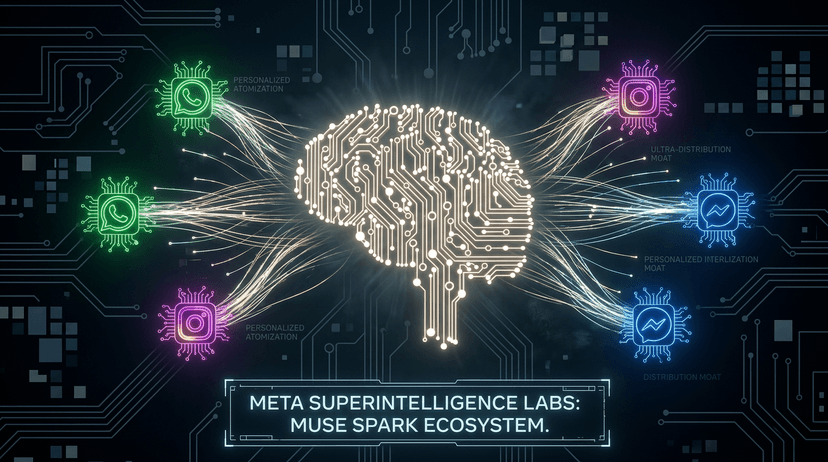
Meta Muse Spark Brings Personal AI Into WhatsApp, Instagram, and Messenger. Here's What That Changes
Meta just launched Muse Spark, its most powerful AI model yet, and its first built under the newly formed Meta Superintelligence Labs. The announcement is bigger than a benchmark release. It signals a fundamental shift in Meta's AI strategy, a new chapter in the frontier model race, and a direct challenge to how the rest of the industry thinks about personal AI. Here is what it means and why it matters to anyone building serious workflows with AI today.