The Hiring Score War: Is Your AI Resume Grade Illegal?
If your hiring product shows candidates a neat “85/100” score, you might already be operating in credit-bureau territory—legally, not metaphorically. Recent lawsuits are pushing courts to treat AI “suitability scores” like consumer reports, which means old-school rules (think FCRA) suddenly apply to modern ML pipelines. That changes everything: disclosure, written consent, accuracy obligations, and—most dangerously—adverse action notices when someone is rejected based on an algorithm. For HR-Tech founders, this isn’t a compliance footnote. It’s a product requirement that can make the difference between a scalable platform and a class-action magnet.
Why HR‑Tech founders and legal counsel must treat AI hiring scores like credit reports—today.
If you’ve ever watched a hiring dashboard flash a green “85/100” next to a candidate’s name, you’ve felt the thrill of data‑driven decision‑making. But that thrill can quickly turn into a legal nightmare. In the past month, high‑profile lawsuits—including claims against Eightfold AI for "secret scoring" and Workday for algorithmic bias—have thrust AI‑generated hiring scores into the courtroom spotlight.
For HR‑Tech founders, a single misstep can now cost millions in damages. For in-house counsel, the challenge is interpreting a 1970s consumer-credit law (the Fair Credit Reporting Act, or FCRA) for a brand-new class of algorithms.
1. The Legal Pivot: Why the FCRA is the New Hiring Playbook#
The Fair Credit Reporting Act was written for credit bureaus, not HR platforms. However, courts are increasingly treating AI "suitability scores" as consumer reports. According to the FCRA, any communication used to evaluate a consumer for employment must follow strict transparency rules.
Key FCRA Obligations for AI Tools#
| Requirement | What It Means for Your Product |
|---|---|
| Disclosure | You must explain how the score is calculated and what data sources were used. |
| Consent | Obtain explicit, written permission before processing an applicant's data. |
| Accuracy | Ensure the model is regularly validated and the underlying data is correct. |
| Adverse-Action Notice | If a candidate is rejected because of the AI score, you MUST provide them with a copy of that report and a summary of their rights. |
Recent Precedent: As of January 22, 2026, lawsuits like the one against Eightfold AI argue that "secret scores" generated without candidate knowledge are a direct violation of federal law. If your software rejects a candidate without sending an "adverse action notice," you are likely out of compliance.
2. Auditing the Black Box: The New Transparency Standard#
A "Black Box" audit is no longer optional; it’s a business necessity. Regulatory pressure (such as the NYC AI Bias Law) now requires independent audits to ensure your algorithms aren't inadvertently discriminating based on race, gender, or age.
Building an Audit-Ready Pipeline#
- Input-Output Sampling: Regularly feed synthetic profiles into your tool to check for score disparities.
- Statistical Parity Tests: Compare score distributions across protected classes.
- Feature Importance Analysis: Use techniques like SHAP or LIME to explain why a specific candidate got a specific score.
- Third-Party Review: Contract accredited auditors to provide a "seal of fairness" that can serve as a litigation shield.
3. The Scraping Backlash: Reddit, LinkedIn, and Data Sovereignty#
The era of "free data" is ending. platforms like LinkedIn and Reddit have aggressively updated their terms to forbid large-scale automated scraping. Relying on "scraped" data to train your AI hiring tools now carries massive contractual risk.
The Strategy Shift:
- First-Party Consent: Instead of scraping, move toward a model where applicants explicitly opt-in to have their social data used for vetting.
- Partner APIs: Secure legal licensing for training data rather than relying on gray-market scraping.
- Synthetic Data: Explore using high-quality synthetic datasets to train models without touching sensitive, non-consented PII.
4. Redesigning Candidate UX: From "Score" to "Insight"#
Research suggests that candidates who see a raw numeric score without context feel a 30% drop in perceived fairness. To mitigate this, developers must redesign the candidate experience:
- Explain, Don't Just Show: Replace "Match Score: 78%" with "Your score reflects your 5 years of Python experience and your leadership in X."
- The "Score-Review" Button: Give candidates the right to dispute an AI score if they believe the data used (e.g., a missing certification) was incorrect.
- Automated Notices: Integrate adverse-action notices directly into your ATS (Applicant Tracking System) so they are triggered automatically upon rejection.
5. Compliance-First Roadmap (2026)#
| Quarter | Milestone |
|---|---|
| Q1 | Implement FCRA-compliant disclosure and consent modals in the application UI. |
| Q2 | Deploy an internal bias-tracking dashboard to monitor score distributions. |
| Q3 | Transition data pipelines away from scraped sources to 100% consented/licensed data. |
| Q4 | Complete a third-party independent audit and publish a "Model Card" for transparency. |
Conclusion: The Transparency Trap#
The hiring-score war isn't just about technology; it's about trust. Treating your AI resume grades like credit reports isn't just a way to avoid a lawsuit—it's a way to build a more ethical, transparent, and successful business.
Call to Action: Schedule a cross-functional audit between your Legal, Product, and Engineering teams this week. Review your current "adverse action" workflow. Does it meet the FCRA standard? If not, the clock is ticking.
Sources (Last 30 Days)#
- Eightfold AI Lawsuit Analysis (Jan 22, 2026)
- Workday Algorithm Bias Class Action (Jan 14, 2026)
- NYC AI Bias Law Compliance Updates (Jan 7, 2026)
- CFPB Guidance on Automated Employment Decisions (Jan 2026)
Related Posts
AI Knowledge Base: How to Chat With Your Documents
Every team has knowledge scattered across documents, meeting notes, transcripts, and files, but finding the right answer at the right moment is still harder than it should be. An AI knowledge base helps teams chat with their documents, retrieve grounded answers, and turn existing company knowledge into faster, more reliable work.
ChatGPT 5.5 Just Changed AI Workflow Automation Forever
OpenAI released GPT-5.5 on April 23, 2026. The headline is bigger benchmark scores, but the real story is more practical: AI is moving from chat responses to real work execution. For teams building with AI agents, multi-model AI, live contexts, and workflow automation, this is an important shift.
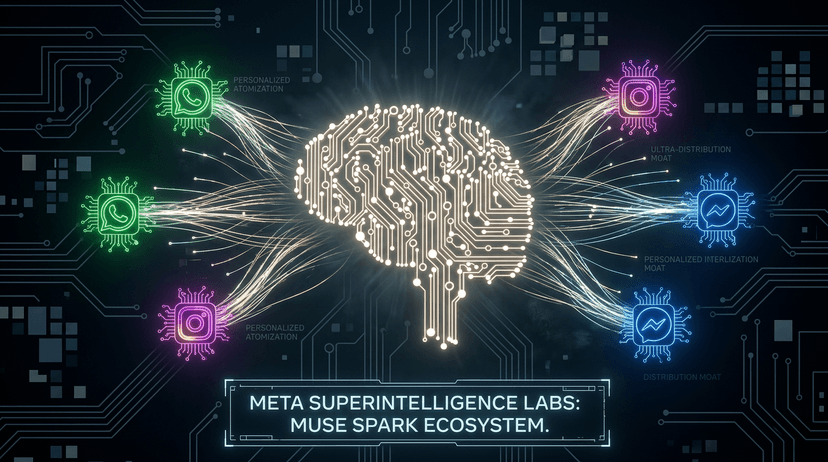
Meta Muse Spark Brings Personal AI Into WhatsApp, Instagram, and Messenger. Here's What That Changes
Meta just launched Muse Spark, its most powerful AI model yet, and its first built under the newly formed Meta Superintelligence Labs. The announcement is bigger than a benchmark release. It signals a fundamental shift in Meta's AI strategy, a new chapter in the frontier model race, and a direct challenge to how the rest of the industry thinks about personal AI. Here is what it means and why it matters to anyone building serious workflows with AI today.